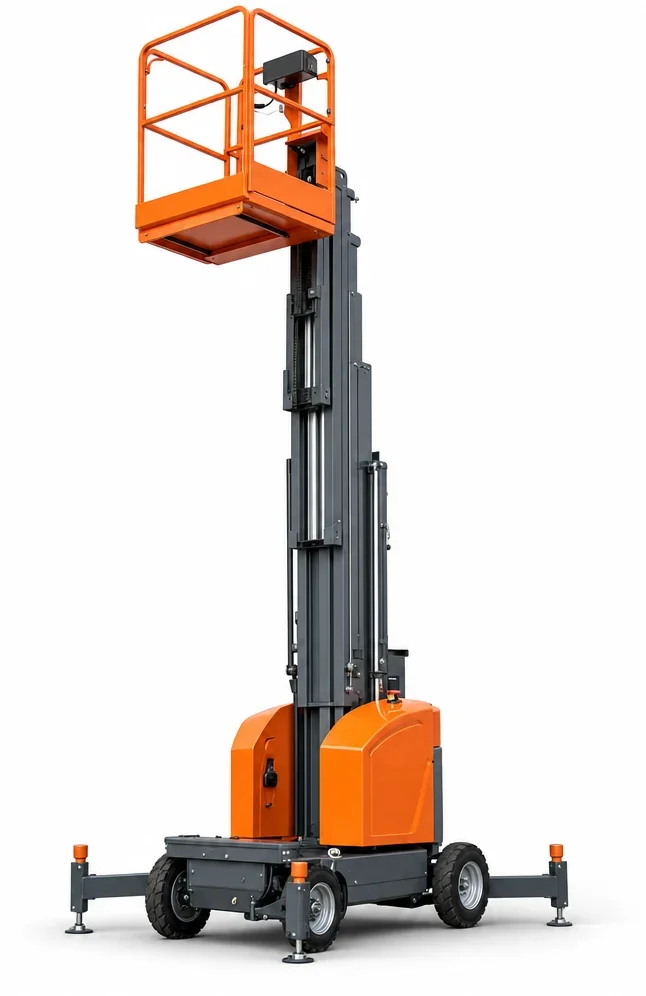
When a vertical mast lift is the right shape
- Straight-up tasks near walls or in corridors where a scissor may be too wide
- Work inside atriums with limited staging space
- Maintenance in finished areas where weight and floor protection are critical
If you need to cross rough ground or reach over obstacles, consider /articulating-boom-lift-rental/ for up-and-over or /electric-scissor-lift-rental/ for larger platforms on slabs.
Local planning factors
- Coastal humidity: Electronics and controls benefit from attentive maintenance in high-salinity air, especially on multi-day scopes.
- Interior access: Measure doorways, elevator cabs, and turning clearances common to local campuses and medical complexes.
- Wind exposure: Vertical mast lifts are primarily interior or tightly sheltered tools. Exterior or open-breezeway work must align with the unit’s instructions and site procedures.
Floor loading and protection
Confirm slab ratings, mezzanine capacities, and finishes. Many vertical masts are designed for sensitive floors with non-marking tires, but concentrated loads at casters, outriggers, or base frames still require verification.
Working height and reach limits
These machines travel straight up with minimal outreach. Check required platform height against fixture locations, then consider any overhead obstructions like ducts or lighting grids.
Pairing with other equipment
For multi-trade interiors, vertical masts can complement /electric-scissor-lift-rental/ units where wider platforms speed repetitive tasks, while the mast handles cramped or high-traffic corridors.
Planning note
Interior and elevated work must follow the specific unit’s instructions and site procedures. In this regional climate, moving equipment from outdoor staging into conditioned spaces may introduce condensation—allow time for surfaces to dry before entry.